
Introduction
Security is no longer optional—it is a critical aspect of business operations, residential safety, and public spaces. Security equipment and solutions encompass a wide range of technologies and services designed to prevent, detect, and respond to threats effectively.

Security Equipment
Security equipment refers to the physical and digital devices used to protect people, property, and information.
2.1 Surveillance Systems
CCTV Cameras: Monitor premises 24/7 and deter criminal activity
IP Cameras: Allow remote access via the internet for real-time monitoring
Dome & PTZ Cameras: Offer flexible coverage for large areas
2.2 Access Control Systems
Biometric Access: Fingerprint, iris, or facial recognition for secure entry
RFID Cards & Key Fobs: Controlled access for employees or residents
Smart Locks: Integration with smartphones and IoT devices
2.3 Intrusion Detection & Alarm Systems
Motion Sensors: Detect unauthorized movement in restricted areas
Glass Break Sensors: Alert when windows or doors are tampered with
Burglar Alarms: Immediate alerts to occupants and authorities
2.4 Fire & Safety Equipment
Smoke & Heat Detectors: Early warning systems for fire hazards
Sprinkler Systems & Fire Extinguishers: Immediate response to fires
Emergency Evacuation Systems: Guiding occupants safely during crises
2.5 Personal Security Devices
Wearable Alarms: For personal safety in case of emergencies
GPS Trackers: Monitoring high-risk personnel or valuable assets
Panic Buttons: Quick alert systems for staff in danger
Security Solutions
Security solutions are integrated approaches combining technology, processes, and personnel to protect assets and ensure safety.
3.1 Physical Security Solutions
Security Guards & Patrol Services: Human oversight for proactive protection
Perimeter Security: Fencing, gates, and motion detection for large properties
Visitor Management Systems: Controlled access and record-keeping
3.2 Cybersecurity Solutions
Firewalls & Antivirus Systems: Protect networks from digital threats
Data Encryption & Backup: Safeguard sensitive information
Access Management Solutions: Ensure only authorized users can access critical data
3.3 Integrated Security Solutions
Smart Security Systems: Combine CCTV, alarms, access control, and IoT devices
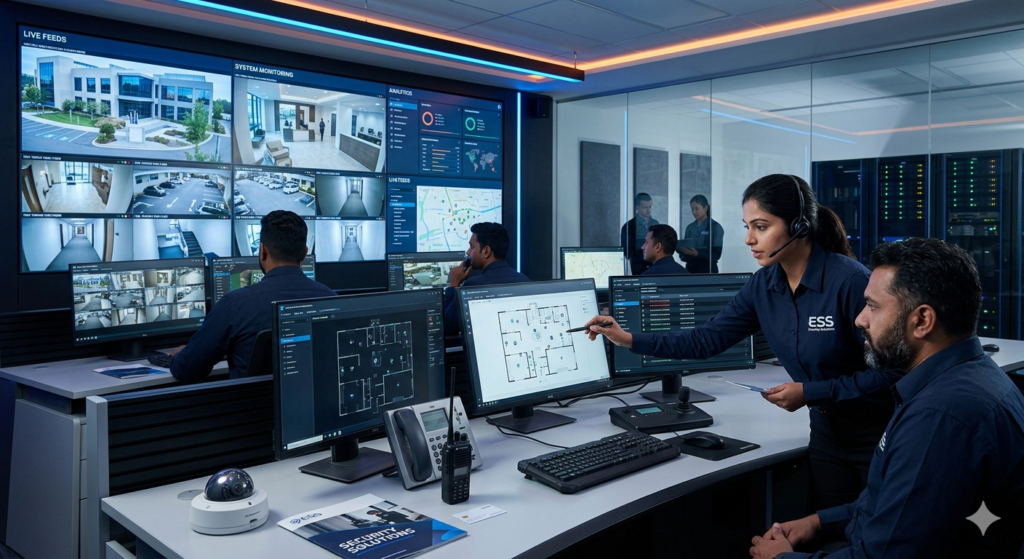
Centralized Monitoring Centers: Real-time monitoring and rapid response
Risk Assessment & Security Audits: Evaluate vulnerabilities and implement strategies
Importance of Security Equipment & Solutions
Protection of People: Ensures safety of employees, residents, and visitors
Asset Security: Prevents theft, vandalism, and property damage
Regulatory Compliance: Meets safety and industry standards
Peace of Mind: Provides confidence in personal and organizational safety
Challenges in Security Management
Rapidly evolving security threats
Integration of legacy and modern systems
Cost constraints for high-end equipment and services
Balancing privacy concerns with security measures
Future Trends in Security
AI-powered surveillance and predictive analytics
IoT-based smart security systems
Cloud-based monitoring and remote management
Biometric and multi-factor authentication becoming standard
Conclusion
Security equipment and solutions are essential for modern safety strategies. By combining physical devices, technological tools, and professional services, organizations and individuals can proactively prevent threats, respond efficiently to incidents, and create a safer environment.